

Medication management for older adults can make everyday care feel more manageable because it turns a vague concern into a short, repeatable routine. Medication support works best when it improves safety and preserves dignity. Build the system together, then keep it simple enough to follow on a busy day. The goal is not perfection. It is a system the family can actually use on a busy day.
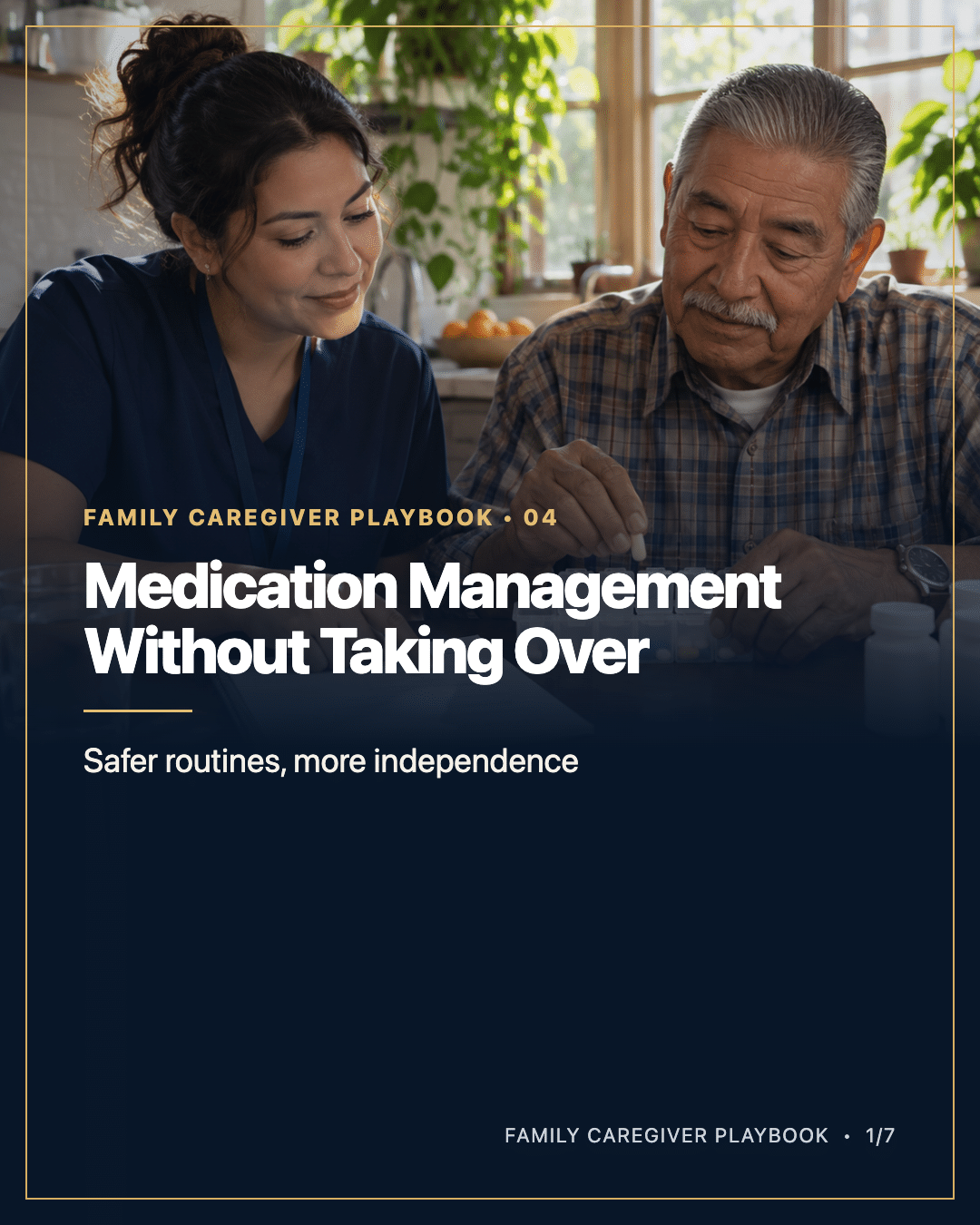


medication management for older adults: a practical five-step reset
1. Keep one current list
Include prescriptions, over-the-counter products, vitamins, and supplements. Keep the note short and specific so the next caregiver can understand it without another phone call. If the situation changes, update the plan instead of relying on memory.
2. Confirm every change
Update the list after each visit and clarify what started, stopped, or changed. Keep the note short and specific so the next caregiver can understand it without another phone call. If the situation changes, update the plan instead of relying on memory.
3. Use one routine
Pair medicines with established cues only when the prescriber or pharmacist agrees. Keep the note short and specific so the next caregiver can understand it without another phone call. If the situation changes, update the plan instead of relying on memory.
4. Store them safely
Follow label instructions and keep medicines away from heat, moisture, and mix-ups. Keep the note short and specific so the next caregiver can understand it without another phone call. If the situation changes, update the plan instead of relying on memory.
5. Ask before altering
Never crush, split, stop, or combine medicines without professional guidance. Keep the note short and specific so the next caregiver can understand it without another phone call. If the situation changes, update the plan instead of relying on memory.
How to make medication management easier to maintain
Choose one person to keep the information current, but do not make that person carry every task. Store the plan where approved helpers can find it, date important updates, and review it after a new symptom, appointment, medication change, or difficult week. A simple checklist used consistently is more valuable than a complicated system nobody opens.
This medication management for older adults also works better when the older adult helps shape it. Ask what feels useful, what feels intrusive, and which routines matter most to them. That conversation protects dignity while giving the family clearer information for decisions.
One useful move today
Take a photo of the current medication list and confirm the printed copy matches it. A pharmacist can help review timing, interactions, storage, and confusing instructions.
Families balancing care with work can also review our home care guidance for busy professionals. For additional background, see FDA medication safety tips for older adults.
This article provides general caregiving information, not individualized medical advice. For urgent symptoms or immediate danger, contact the appropriate emergency service.

Claudio Alegre is the Family Care Manager for Angel Home Care Services. He lives in Miami, Florida with his wife and 3 boys. He's passionate about all things healthcare, technology, and their impact on patients and their families. He can be reached at calegre@angelhcs.com or directly at 305.220.4544 ext. 208.
- How to Support Medication Management Without Taking Over - November 26, 2026
- How to Do a 5-Minute Fall-Risk Scan Before You Leave - November 23, 2026
- How to Build a One-Page Care Binder Everyone Can Use - November 19, 2026